
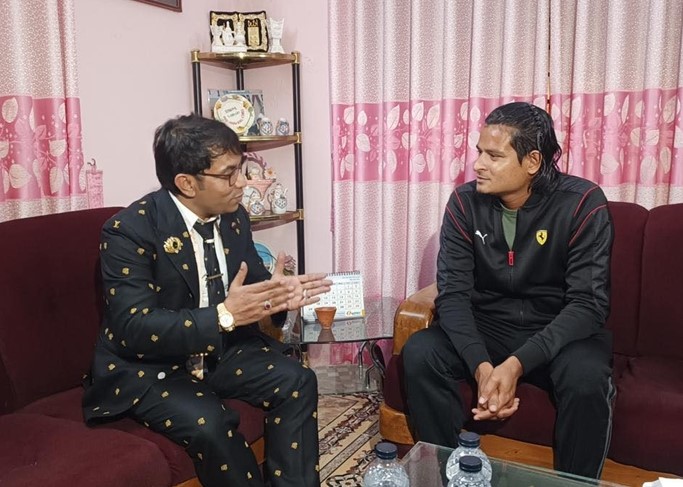
Fahim Al Choudhury, a prominent figure in the cricket fraternity, has recently found himself in the spotlight in the context of the Bangabandhu Premier League (BPL) 2026.
Nasum Ahmed, a talented Bangladeshi cricketer, allegedly expressed concerns over his unpaid salary of 3.5 million taka from the Sylhet Titans, a team he represented in the aforementioned tournament.
In response to this sensitive claim, Fahim Al Choudhury swiftly addressed the media, emphasizing his role as an advisor rather than the owner of the Sylhet Titans. His efforts in clarifying this critical point demonstrate the depth of his understanding about the dynamics at play within the team.
A Critical Examination of Fahim’s Response
Fahim’s rebuttal, though timely, raises a host of complex questions, including the precise responsibilities borne by an advisor as opposed to an owner within the framework of the BPL 2026.
An expert in the field revealed that there often exists a fine line between an advisor’s roles and powers compared to those of an owner.
Thus, in light of Fahim’s assertion that he bears no responsibility for Nasum’s unpaid salary, an unbiased assessment of his claims will be crucial in shedding more light on this complicated matter.
The Role of Unpaid Salaries in the BPL
It’s worth pointing out that Nasum Ahmed‘s alleged unpaid salary serves as merely one instance in a long list of salary disputes within the world of cricket.
Moreover, this phenomenon is, regretfully, not confined to any particular tournament or league.
- The recent controversy surrounding Rashid Khan‘s underpayment in the Bangladesh Premier League is a prime example.
- Cricket enthusiasts worldwide may recall numerous instances where disputes arose over compensations, bonuses, or even basic salary payments within various teams.
The Feline Impact of Social Media Reactions
Social media platforms have created an unparalleled environment for players, teams, and fans to engage, air their opinions, and often, initiate heated debates.
Upon learning about Fahim’s assertion and Nasum’s unpaid salary, fans, both for and against the duo, reacted vehemently on various platforms.
Some fans vehemently defended Nasum, while others appeared to back Fahim’s version of events.
A striking phenomenon observed on social media was the proliferation of hashtags that discussed the intricacies of the BPL and related financial disagreements.
This digital deluge, characterized by the unbridled enthusiasm of enthusiasts on both sides of the debate, testifies to the unmatched influence that modern technology has had on our collective viewing experience of sports.
By virtue of these conversations, cricket enthusiasts around the world are privy to first-hand insights into key issues within the sport.
The Expert’s Verdict
An interview with a prominent cricket journalist was requested to garner insights on the significance of this unfolding narrative.
The discussion provided a deep dive into a broader context, underlining the vital part played by financial stability in the realm of professional cricket.
A particular focus was devoted to the sensitive balance of interests between the personal, the team, and the league within financial matters.
Certain observers believe that Nasum’s reported payment delay is reflective of broader concerns surrounding financial accountability in professional cricket leagues.
Fahim’s Call to the Media
As part of his recent press conference, Fahim Al Choudhury requested the media to exercise discretion while portraying him in their images, emphasizing the importance of relevance, facts, and ethical presentation. His request encapsulates the significance of maintaining a respectful and professional media interface within the world of sports.
This thoughtful gesture on Fahim’s part speaks volumes about the importance of responsible media interactions within our beloved sport.
As cricket continues to grow and flourish globally, incidents like these offer invaluable opportunities for growth and improvement, encouraging all parties involved – players, teams, and the media – to exercise greater sensitivity.