

[CRK]
The Evolution of a Modern Master
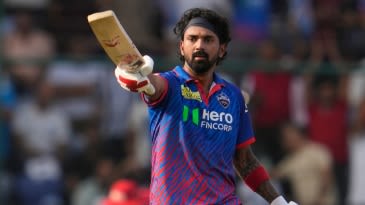
In a sport where narratives shift with every delivery, KL Rahul’s recent unbeaten 152 against the Delhi Capitals stands as a watershed moment. While the match results ultimately favored the opposition due to a defensive collapse, Rahul’s innings was a masterclass in adaptation. Scoring the highest-ever individual total by an Indian in T20 cricket, Rahul proved that even established stars must constantly reinvent themselves to remain relevant in the hyper-aggressive landscape of the modern game.
The Need for Speed
Speaking to broadcasters after the match, a physically drained Rahul was candid about his motivations. For years, the criticism leveled at Rahul often centered on his perceived conservatism—a technical, classical style that sometimes felt at odds with the frantic pace of the T20 format. Rahul admitted that watching the latest trends in international cricket, particularly the fearless approach of younger players, forced a personal reckoning.
“There’s no time in T20 cricket to say ‘later,'” Rahul noted. While he acknowledged the luxury of time afforded in ODI cricket, he highlighted that the opening slot in a T20 match requires a complete shift in philosophy. By prioritizing six-hitting and shedding the hesitation to attack from the very first ball, Rahul managed to shave nine deliveries off his previous fastest IPL century, reaching the milestone in just 47 balls.
A Partnership for the Ages
The innings was not a solo effort, though Rahul’s dominance was absolute. His partnership with Nitish Rana, who contributed a blistering 91 off 44 balls, resulted in a staggering 220-run stand. This partnership now ranks as the second-highest for any wicket in IPL history and stands as the most prolific pairing between two Indian batters. Rahul credited the synergy of the right-left combination, which disrupted the bowlers’ rhythm and placed immense pressure on the Delhi Capitals’ attack from the powerplay onwards.
Deconstructing the Innings
Rahul’s approach remained methodical despite the explosive output. He revealed that he stayed “true to his game” for the first 70 to 80 runs, relying on pure cricketing shots rather than reckless premeditation. It was only in the final stages of the innings that he fully embraced the mindset of pure boundary-hitting, aiming to set a target that would effectively bat the opposition out of the contest.
His performance included an incredible nine sixes and 16 fours, finishing with a strike rate of 227. This level of output was described by expert analyst Deep Dasgupta as Rahul at his “100% capacity.” Dasgupta noted, “Even in his previous hundreds, it felt like there was something in the tank. But this was KL at a 100%, and you couldn’t get anything more from him.”
Why This Matters for Rahul’s Future
This innings is more than just a statistical anomaly; it serves as a psychological breakthrough. By proving to himself that he can maintain an aggressive tempo without sacrificing his technical proficiency, Rahul has unlocked a new dimension of his game. He expressed that the primary goal was to “step back a little bit and see where the T20 game has gone.”
The ability to integrate explosive power-hitting with his hallmark spatial awareness and gap-finding abilities makes him a more complete threat. For fans and critics alike, this performance signals that the “conservative” tag is officially a thing of the past. As Rahul continues his journey, this innings will likely be remembered as the definitive turning point where he successfully bridged the gap between traditional technique and the relentless, modern demands of T20 cricket.
Conclusion
While the result of the match was a disappointment for the Punjab Kings, the individual brilliance displayed by KL Rahul provides a blueprint for the future. As the game continues to evolve, the ability to adapt—much like Rahul has done—remains the greatest asset any professional cricketer can possess. The era of “holding off” is over; in the modern game, the attack starts now.