

[CRK]
The High-Stakes Gamble: Was Krish Bhagat the Right Choice?
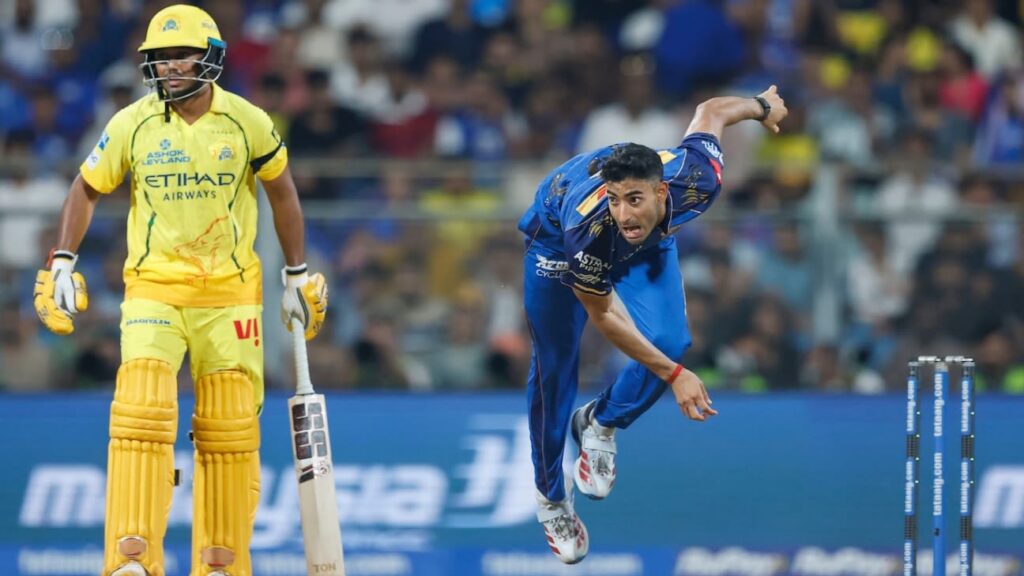
In the high-pressure environment of the Indian Premier League (IPL), tactical decisions can be the difference between a clinical victory and a crushing defeat. This was evident during Mumbai Indians’ (MI) recent clash against Chennai Super Kings (CSK), where the decision to entrust 21-year-old Krish Bhagat with the 16th and 20th overs became a central point of contention.
Bhagat, playing only his second IPL match, had an unremarkable but steady debut three days prior, where he conceded just ten runs across the fourth and sixth overs against a lineup featuring Shubman Gill, Washington Sundar, and Glenn Phillips. However, the challenge shifted dramatically against CSK. Instead of the relative safety of the powerplay, Bhagat was thrown into the ‘death overs,’ conceding 31 runs in those two critical slots.
The Psychology of the ‘Hardest Overs’
Former MI stalwart Ambati Rayudu highlighted the immense pressure placed on the young bowler. Speaking on ESPNcricinfo’s TimeOut show, Rayudu explained the strategic weight of these specific overs. According to Rayudu, the 16th over serves as the trigger point where batting units transition from consolidation to aggression. By the 20th over, the batting side is effectively “throwing everything at it.”
For a young player like Bhagat, being tasked with these two specific overs is an immense psychological burden. Rayudu’s analysis suggests that expecting a debutant to execute under such scrutiny may have been asking too much, labeling them as “two of the hardest overs” in any T20 innings.
The Momentum Factor and the 20th Over
Former MI bowler Mitchell McClenaghan echoed these concerns, focusing on the concept of momentum. In modern T20 cricket, the consensus is that the best bowler should handle the 20th over in the first innings. The reasoning is simple: the emotional state of the team as they walk off the field directly impacts the start of the second innings.
- n
- The Deflation Effect: McClenaghan noted that coming into the dressing room deflated after an over has gone for 15+ runs can negatively influence the chase.
- The Wicket Strategy: In the back end of an innings, the goal is often to secure a wicket before the final over to stifle the opposition’s momentum.
Given this context, the decision to let Bhagat bowl the final over was viewed as a risky move that potentially compromised the team’s psychological footing heading into the chase.
Powerplay Analysis: Hits and Misses
Despite the struggles in the death overs, McClenaghan pointed out some tactical successes in MI’s powerplay. AM Ghazanfar proved impressive, conceding only six runs in one over and serving as an effective match-up against Sanju Samson. Similarly, Mitch Santner provided early value, claiming 1 for 9 in the second over.
However, there was room for improvement. While MI coach Mahela Jayawardene admitted they “lost both the powerplays” (with CSK ending the phase at 73 for 2), McClenaghan suggested that Jasprit Bumrah could have been utilized more aggressively. Once the initial wickets fell, bringing Bumrah back to attack a CSK middle order that was short of runs could have stifled the innings further, rather than the 19 runs Bumrah conceded in his two powerplay overs.
The ‘Wildcard’ Strategy and Execution
The decision to use Bhagat over more experienced options like Hardik Pandya may have been a attempt at a “wildcard” strategy. With Sanju Samson well-set and having dominated Pandya early on (38 from two overs), the MI management likely hoped that a lesser-known bowler with a different style would unsettle the batsman.
While the plan was clear—executing wide yorkers—the execution failed. McClenaghan observed that Bhagat’s deliveries often landed as fuller lengths rather than the intended wide yorkers. This is a common struggle for young bowlers facing their first high-pressure death-over situation in the IPL.
Batting Order Dilemma: Rutherford vs. Varma
The tactical debate extended to MI’s batting order during the chase. The positioning of Sherfane Rutherford (No. 7) and Tilak Varma (No. 5) was questioned by both Rayudu and McClenaghan.
The experts argued that Tilak Varma is far more suited for an immediate impact at the death. Rayudu pointed to Varma’s previous brilliance against Gujarat Titans, where he scored 64 runs in just 17 balls during the final four overs. Varma possesses the rare ability to be explosive without needing a “settling-in” period.
In contrast, Rutherford is a player who needs a few deliveries to find his rhythm before becoming explosive. The suggestion was to move Rutherford up to No. 5 to give him time to set, while utilizing Varma at No. 6 or 7 for an instant assault. As the match unfolded, this analysis seemed validated: Tilak Varma managed 37 from 29 balls, while Rutherford fell for a first-ball duck, unable to make any impact in the limited window he had.