

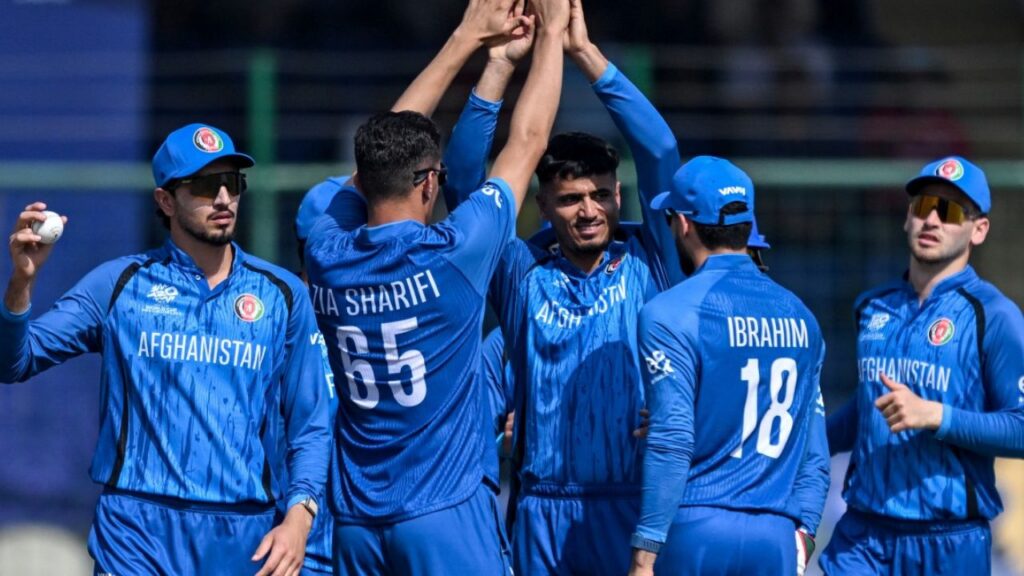
ACB Imposes Strict Sanctions on Three Players Over Unauthorized League Participation
In a move that underscores its commitment to regulatory discipline, the Afghanistan Cricket Board (ACB) has imposed a heavy four-month ban on three of its cricketers. The sanctions come after the players participated in an Indian T20 league without securing the mandatory permission from their governing body. During this disciplinary period, the affected players are strictly prohibited from participating in any domestic or international cricket matches.
The ACB has long maintained a reputation for being vigilant regarding the movements of its players. Given that many Afghan cricketers are highly sought after in overseas T20 leagues across the globe, the board has implemented rigid protocols to ensure that national interests and regulatory standards are not compromised. Any violation of these protocols, particularly regarding the No Objection Certificate (NOC), is typically met with severe penalties.
The Details: Who Are the Banned Players?
The board has come down hard on Samiullah Shinwari, Aftab Alam, and Shehzad Mohammad. The trio took part in the Legends League Cricket (LLC) in India without obtaining the necessary NOC from the apex cricket board of Afghanistan. The absence of this document is viewed as a serious breach of contract and professional conduct.
The participation of these players was particularly notable in the case of Samiullah Shinwari, whose team, the Royal Riders Punjab, eventually emerged as the winners of the tournament. Interestingly, the team also featured the veteran Asgar Afghan. However, the ACB has not imposed any sanctions on Asgar Afghan, as he has already retired from international cricket and is therefore no longer subject to the same contractual obligations as active players.
Regarding their current international standing, the situation is varied. Samiullah Shinwari has not featured in a match for the Afghanistan national team in four years, yet he has not officially retired. Aftab Alam and Shehzad Mohammad last represented their country in 2023. Despite their lack of recent national appearances, the ACB maintains that the rules apply to all registered players.
The Corruption Risk: Why the ACB is Unhappy
Beyond the administrative failure of not securing an NOC, the ACB expressed deep concerns regarding the nature of the league itself. According to a statement shared by Jafar Haand, the board members are wary of the Legends League because it lacks official recognition from the world’s most powerful cricket bodies.
The ACB highlighted that the league is not recognized by the International Cricket Council (ICC) nor the Board of Control for Cricket in India (BCCI). This lack of official oversight increases the perceived risk of fraudulent activity. As stated in the official communication: “The board says that this league is not officially recognized by the International Cricket Council or the Indian Board and there is a ‘high risk of fraud and corruption’ in it.”
The Players’ Perspective: A Struggle for Permission
The situation is not entirely one-sided. Reports indicate that the players felt trapped between their professional commitments and the board’s bureaucracy. It has been alleged that at least one of the players approached the ACB for an NOC before the Legends League began. However, the request was reportedly delayed indefinitely, with board members pushing the approval further and further back.
Feeling they had no other choice—especially after having already committed to the LLC’s commissioner—the players proceeded to play. Furthermore, because they had not been called up to the national squad for a significant period, some of the players felt that seeking formal permission from the ACB was an unnecessary formality.
A Broader Pattern: Limiting Overseas Commitments
This crackdown is part of a larger strategy by the ACB to prioritize national duty over the burgeoning franchise market. In recent years, the board has observed a trend where contracted players prioritised T20 leagues over international assignments. To combat this, the ACB recently introduced a policy limiting every contracted player to a maximum of three overseas leagues per year.
This policy has had a significant impact on Afghanistan’s biggest stars, including Rashid Khan, Noor Ahmad, and Rahmanullah Gurbaz. As some of the most in-demand players in the global T20 circuit, these athletes must now carefully choose which leagues to join to avoid falling foul of the board’s strict regulations.
By banning Shinwari, Alam, and Mohammad, the ACB is sending a clear message: regardless of a player’s current status in the national team, the board’s authority and the safety of the game against corruption remain paramount.