

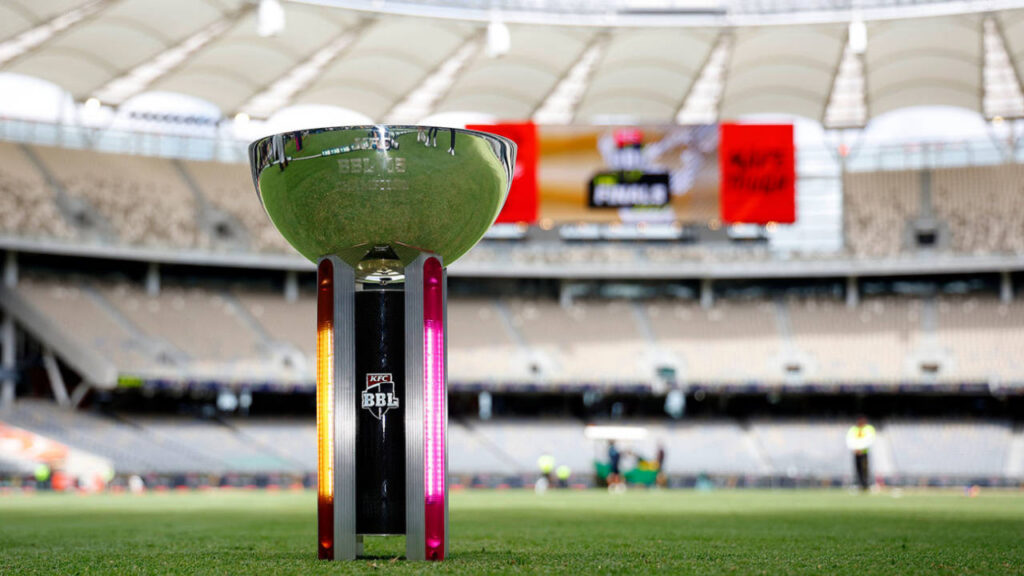
The Shift Toward Privatisation: Cricket Australia’s Bold Move
Cricket Australia (CA) is officially entering the next phase of its Big Bash League (BBL) privatisation plan. The governing body is set to test the market for three specific franchises: the Melbourne Renegades, Perth Scorchers, and Hobart Hurricanes. The goal is to establish definitive sales valuations and gauge global interest, even as a significant internal rift divides the state cricket associations.
While Victoria, Western Australia, and Tasmania are eager to explore what private capital could bring to their respective teams, New South Wales (NSW) and Queensland have emerged as the primary detractors. Last Wednesday, Queensland joined NSW in rejecting CA’s proposal, though their reasons for doing so differ significantly. Meanwhile, South Australia is maintaining a cautious ‘wait and see’ approach, preferring to let the initial sales play out before committing the Adelaide Strikers to the market.
What Exactly is Up for Sale?
To understand the current tension, it is vital to clarify what is actually being put on the auction block. Contrary to some public misconceptions, the states do not own the BBL franchises; Cricket Australia owns all eight teams. The states currently operate these teams under 30-year leases, which are exactly at their 15-year midpoint.
CA’s proposal allows states to sell between 49% and 75% of their franchises to private investors. In specific cases, such as Victoria and NSW, there is even an option to sell 100% of their second franchise. Here is how the mechanics work:
- Partial Sale (49%): The state would receive a cash injection from CA while retaining 51% ownership. However, future revenues would be split with the investor.
- Decision-Making: Under a 49% model, investors generally would not control cricket operations or have a say in the broader running of Australian cricket.
- Full Sale (100%): If a club like the Melbourne Renegades is sold entirely, the investor would take over full operations, potentially even moving home grounds or rebranding.
The Influence of ‘The Hundred’ and The Raine Group
Cricket Australia is not reinventing the wheel. They are following a blueprint nearly identical to the ECB’s sale of The Hundred franchises in the UK. This is no coincidence, as the global merchant bank The Raine Group is acting as the chief advisor for both processes. The Hundred recently saw massive success, netting the ECB approximately AUD$1.846 billion.
Valuations for BBL teams are currently estimated between AUD$80 million and $180 million, depending on the percentage of the stake and the specific market. For comparison, teams in The Hundred like the Trent Rockets were valued at roughly $155 million, with 49% stakes selling for over $75 million. The prestige of the Australian market is expected to draw similar, if not higher, interest from global conglomerates.
The IPL Factor: A New Era of Control?
One of the most significant talking points in this transition is the potential involvement of Indian Premier League (IPL) owners. There is a palpable concern within Australian cricket circles about what happens when these massive entities take the reins. We have already seen this play out in the UK:
- Sun Group: Purchased 100% of the Northern Superchargers and rebranded them to Sunrisers Leeds.
- Reliance Industries: Acquired a stake in the Oval Invincibles.
- RPSG Group: Purchased 70% of the Manchester Originals.
Critics fear that IPL owners might prioritise their global branding over local traditions, potentially influencing player retention rules, auction structures, and even coaching staff appointments. There is also a broader geopolitical concern regarding the potential blacklisting of certain players, a dynamic that has long existed within the IPL ecosystem.
Why Are NSW and Queensland Resisting?
The resistance from New South Wales and Queensland is not merely about tradition; it is about financial philosophy. Cricket NSW has proposed an alternative self-funding model, arguing that the sport should optimise existing revenue streams—such as broadcast rights and commercial partnerships—rather than seeking outside capital. Crucially, NSW has expressed a desire to distance the game from wagering revenue, stating that the enjoyment of cricket should not be predicated on betting.
Queensland’s opposition leans more toward the necessity of the sale. CA Chief Executive Todd Greenberg noted that Queensland does not believe player salaries need to be artificially inflated through privatisation. CA, however, argues that higher salaries are essential to remain competitive with emerging leagues like the SA20 (South Africa) and the ILT20 (UAE).
The Financial Divide
There is also a clear divide based on balance sheets. Some states are under significant pressure due to debt from major stadium projects and see privatisation as a necessary lifeline. Others, who view the BBL as a currently profitable league that ‘isn’t broke,’ see no reason to fix it by giving up equity to foreign investors.
Conclusion: What Happens Next?
The upcoming market test will provide the definitive data needed to break the stalemate. By soliciting non-binding valuations, CA will be able to show the holdout states exactly what they are leaving on the table. If the numbers are high enough, the pressure to join the privatisation wave may become irresistible. For now, the Melbourne Renegades, Perth Scorchers, and Hobart Hurricanes stand as the pioneers in a move that could fundamentally alter the landscape of Australian cricket forever.
