

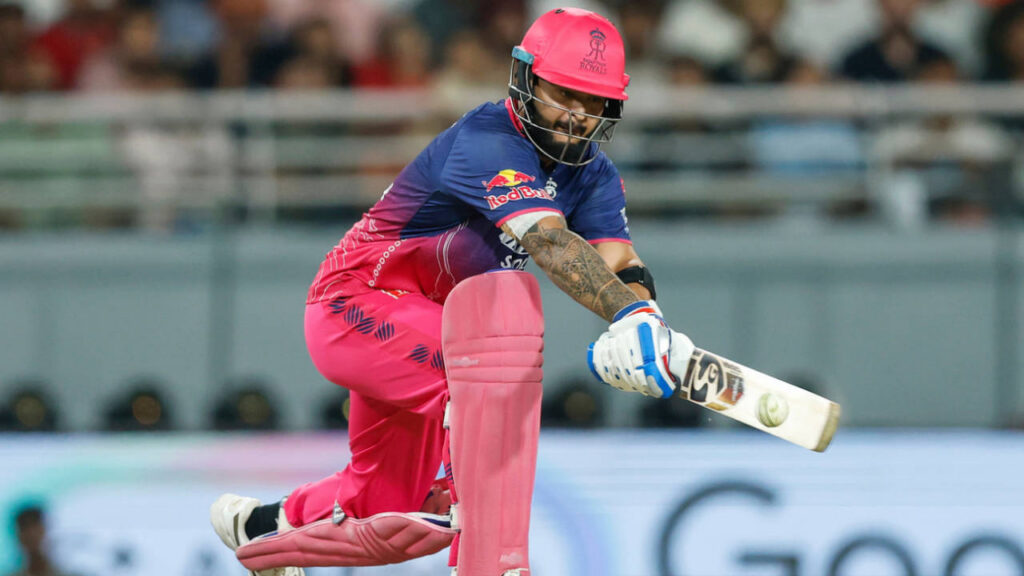
Riyan Parag, the charismatic captain of the Rajasthan Royals, found himself at the centre of a disciplinary maelstrom after a photo surfaced showing him using a vape inside the team dressing room during the IPL 2026 encounter with Punjab Kings in New Chandigarh. The incident prompted the Board of Control for Cricket in India (BCCI) to impose a 25% fine on his match fee and assign a demerit point, underscoring the league’s zero‑tolerance stance on conduct that could tarnish its reputation.
Background: The match that set the stage
On Tuesday, the Royals chased down Punjab Kings’ formidable total of 222 runs, sealing victory with four balls to spare. The nail‑biting finish amplified the match’s excitement, but the post‑game celebrations were quickly eclipsed by a breach of protocol that raised eyebrows across the cricketing world.
What transpired in the dressing room
According to a BCCI statement released on Thursday, Parag was observed vaping inside the dressing area – a direct violation of Article 2.21 of the IPL’s Code of Conduct, which addresses actions that bring the game into disrepute. The match referee, Amit Sharma, confronted the player, who promptly admitted the offence and accepted the imposed sanction.
The penalties imposed
- Financial fine: 25% of Parag’s match fee, a substantial amount given the lucrative nature of IPL contracts.
- Demerit point: One point added to his disciplinary record, potentially influencing future penalties if further breaches occur.
The BCCI also signalled that it is “exploring other options to initiate proceedings for stringent action against the erring team, its officials and player/s to ensure that the reputation of IPL remains intact.” This warning hints at possible broader repercussions for the Rajasthan Royals as a franchise.
Context: Recent disciplinary trends in IPL 2026
The vaping incident does not exist in isolation. Less than two weeks earlier, Rajasthan Royals’ team manager Romi Bhinder faced a fine of INR 1 lakh after being caught using his mobile phone in the dugout during the Royals’ match against Royal Challengers Bengaluru on April 10 in Guwahati. Bhinder’s breach pertained to Article 4.1.1 of the IPL players’ and match officials’ area protocols, which strictly prohibit unauthorized electronic device usage in designated zones.
Bhinder admitted his mistake, offered an unconditional apology, and was warned to exercise greater care moving forward. The episode, captured in a candid photograph with Vaibhav Sooryavanshi, quickly spread across social media, illustrating how swiftly off‑field actions can become public scrutiny points.
Why these incidents matter
Both Parag’s vaping and Bhinder’s phone usage highlight a growing concern for the IPL’s image. The league, now in its 15th season, commands a massive global audience and massive commercial investments. Any behaviour that could be perceived as unprofessional threatens to erode sponsor confidence, fan trust, and the sport’s integrity.
What the BCCI’s Code of Conduct says
Article 2.21 explicitly forbids actions that could bring the game into disrepute, covering a broad spectrum from substance misuse to conduct that undermines the sport’s decorum. While vaping is not a traditional drug offence, the public health concerns and the perception of casual substance use inside a professional environment are sufficient grounds for disciplinary action.
Potential future ramifications
Should Parag or any other player repeat such infractions, the BCCI’s escalating response could involve larger fines, suspension from matches, or even more severe sanctions such as bans. The league’s anti‑corruption unit, which monitors player conduct diligently, has already demonstrated its willingness to act swiftly.
Reactions from the cricketing community
Fans and analysts have taken to social platforms with mixed reactions. Some argue that vaping is a personal choice that should not be penalised so harshly, especially when no health risk to others is evident. Others contend that cricket stars serve as role models, and any public indulgence in potentially harmful habits must be curbed to protect the sport’s image.
Former players and commentators have largely supported the BCCI’s decision, emphasizing that the IPL’s credibility depends on consistent enforcement of its rules. They note that the high‑profile nature of this incident provides a teachable moment for younger athletes navigating the pressures of professional sport.
Looking ahead: The Royal’s path forward
Rajasthan Royals now face the dual challenge of addressing the disciplinary breach while maintaining on‑field focus. The franchise’s management is expected to issue an internal statement reinforcing adherence to the IPL’s code and outlining preventive measures—such as stricter monitoring of dressing‑room conduct—to avoid future lapses.
For Parag, the immediate priority is to serve the fine and demerit point, while demonstrating contrition and a renewed commitment to professionalism. His leadership role means his actions will be closely watched, both by teammates and the broader cricket audience.
Conclusion
The vaping incident involving Riyan Parag serves as a stark reminder that the IPL’s governing bodies are vigilant in protecting the league’s reputation. With fines, demerit points, and the possibility of more severe sanctions on the table, players and officials must navigate the spotlight with heightened awareness of their conduct. As the season progresses, all eyes will remain on how the Royals and the BCCI enforce these standards, ensuring that cricket’s grandest stage remains a showcase of skill, discipline, and integrity.