

[CRK]
A Tale of Two Halves: Momentum Lost in Dhaka
Cricket is often a game of momentum, and for the first 23 overs of the first ODI against New Zealand in Dhaka, Bangladesh seemed to have it firmly in their grasp. However, a catastrophic slowdown in the middle overs transformed a routine chase into a cautionary tale of batting fragility and tactical rigidity. New Zealand eventually secured a 26-run victory after Bangladesh were bowled out for 221 in 48.3 overs, exposing deep-seated issues within the Tigers’ middle-order construction.
The Promising Start: Saif and Litton Set the Stage
The match began with a flicker of hope. At one stage, Bangladesh were cruising at 114 for 2 in the 23rd over, a position that usually suggests a comfortable path to victory. The cornerstone of this start was a vital 93-run partnership for the third wicket between Saif Hassan and Litton Das.
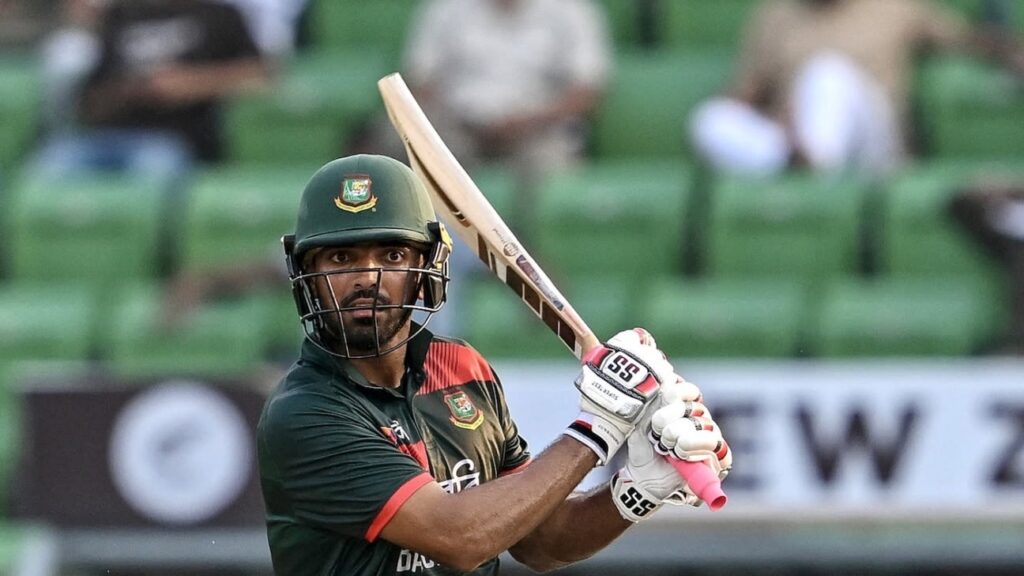
Saif Hassan looked composed, eventually reaching his second ODI half-century, providing the stability the team desperately needed. Litton Das, meanwhile, played a supporting role with a score of 46. However, Litton’s innings ended in a pattern that is becoming alarmingly familiar: this marked his third consecutive dismissal in the 40s, a trend that highlights a struggle to convert starts into match-winning scores.
The Middle-Overs Muck-Up: A Tactical Stagnation
The turning point arrived when New Zealand managed to remove both Saif and Litton in the span of just five overs. What followed was not a collapse of wickets, but a collapse of intent. The partnership between Towhid Hridoy and Afif Hossain became the focal point of the match’s frustration.
Over the course of 13.1 overs, Hridoy and Afif added 52 runs. While the partnership lasted, the scoring rate was glacial. In a limited-overs format, the lack of aggression was startling; only a single boundary was hit between the two of them during this period. The statistical impact was devastating:
- n
- Required Run Rate at the start of the partnership: 5.13
- Required Run Rate when Afif was dismissed in the 41st over: 7.11
As the required rate climbed, the atmosphere at a half-filled Shere Bangla Stadium shifted from anticipation to irritation. The spectators, witnessing what looked more like a Test-match approach than an ODI chase, inevitably responded with boos, mirroring the frustration of the coaching staff and analysts alike.
Individual Struggles and Systemic Failures
The issues extended beyond the Hridoy-Afif partnership. Captain Mehidy Hasan Miraz continued his trend of being a slow starter, failing to inject the necessary urgency into the chase. Similarly, the batting contributions of Rishad Hossain have seen a significant dip over the last two years, leaving the lower-middle order devoid of firepower.
After the match, Saif Hassan attempted to contextualize the performance by mentioning the pitch conditions. “I think the wicket was a bit challenging right from the start… It [the pitch] was a bit uneven,” Saif noted. However, he was quick to admit that the conditions were not a valid excuse: “I don’t think there’s any way to escape by using that excuse… we needed to adjust.”
The Domestic Dilemma: A Clash of Roles
The root of Bangladesh’s middle-order malaise may lie in the domestic structure. Coach Phil Simmons recently highlighted a critical discrepancy: many of the players currently occupying middle-order slots in the national side are primarily top-order batters in domestic cricket. This lack of familiarity with the specific demands of the middle overs—rotating strike under pressure and accelerating against spin—has led to a lack of proactivity on the international stage.
With Najmul Hossain Shanto also experiencing a dip in form, the scrutiny on Afif and Mehidy has intensified. For Bangladesh to compete at the highest level, the transition from domestic dominance to international utility must be addressed. Until the middle order learns to adapt to the ticking clock of an ODI chase, the Tigers will continue to find themselves in precarious positions, regardless of how well the top order sets the platform.