
[CRK]
The Turning Point: Why India Fell Short in the First T20I
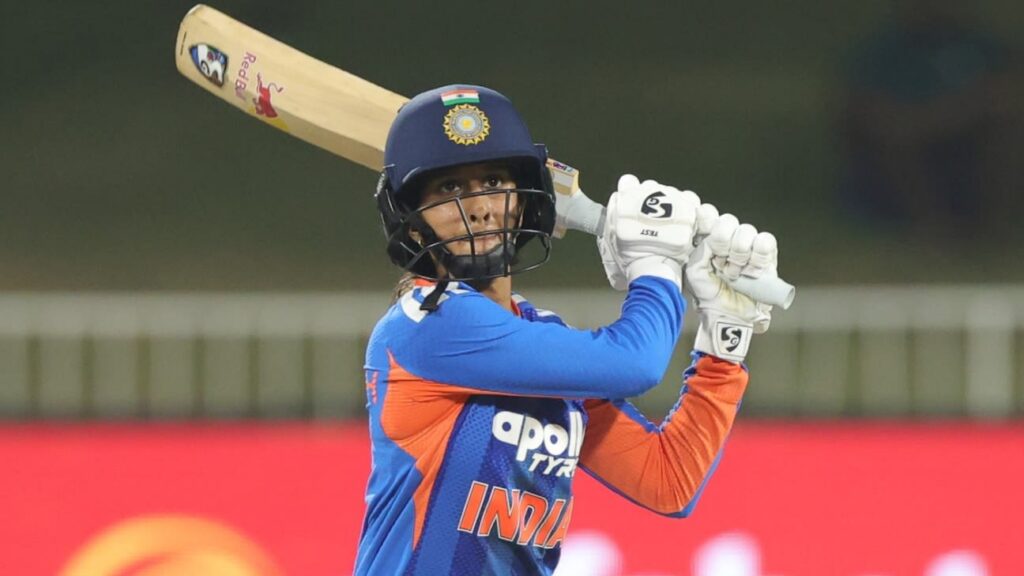
In the high-stakes environment of international T20 cricket, momentum is a fragile commodity. For the Indian Women’s team, the opening match of their five-game T20I series against South Africa served as a stark reminder of how quickly a promising position can evaporate. At the heart of the post-match discussion was Jemimah Rodrigues, whose departure in the 15th over triggered a stuttering finish that ultimately saw India post a sub-par total of 157.
Despite a resilient partnership between Rodrigues and captain Harmanpreet Kaur, India found themselves unable to shift into top gear during the death overs. South Africa chased down the target with five balls to spare, claiming a 1-0 lead and leaving the Indian camp to rue what could have been. According to Rodrigues, the diagnostic of the defeat was simple: a lack of clinical execution when it mattered most.
A Tale of Two Halves: The Powerplay and the Partnership
India’s innings began with the kind of intent fans have come to expect from Shafali Verma. The explosive opener blazed 34 runs off just 20 deliveries, providing the early impetus needed to put the South African bowlers on the back foot. However, the momentum was briefly halted when both Verma and Smriti Mandhana fell in quick succession. This brought Rodrigues and Kaur together, and the duo set about rebuilding the innings with clinical precision.
The pair added 71 runs in 51 balls, a stand characterized by clever rotation of strike and calculated boundaries. At that juncture, India appeared well-positioned to breach the 175-run mark. Rodrigues admitted that the conditions were not entirely straightforward, noting a slight ‘hold’ on the wicket that required set batters to stay deep into the innings. “We were around 15-20 runs short,” Rodrigues noted after the match. “With the kind of start we got… then Harman and I getting that partnership back. I think when we had built that momentum and removed the difficult part of it, when time came to capitalise, we were not able to capitalise.”
The Impact of ‘The Wrong Time’ Dismissal
The defining moment of the Indian innings occurred in the 15th over when Tumi Sekhukhune dismissed Rodrigues. Leaving the score at 119 for 3, the dismissal forced a fresh batter into a situation where the pitch was still proving tricky to read. While Harmanpreet Kaur remained unbeaten on a valiant 47 off 33 balls, the lower-order support was noticeably absent.
Rodrigues took personal responsibility for the shift in tempo. “It was just that when the time came for us to capitalise, I got out, I fell on the wrong time,” she explained. “Because for set batters, it’s easier to bat through and take it deep. So, in the next match, I will come back and take that responsibility again.” The inability of the middle and lower order to accelerate against the South African attack meant India left valuable runs on the table—runs that could have changed the complexion of the South African chase.
Bowling Bright Spots Amidst the Defeat
While the batting failed to reach its projected heights, the Indian bowling unit showed immense fight. South Africa’s victory was not a cakewalk, as the match stretched into the final over. Rodrigues was quick to praise the young bowling core, particularly Shreyanka Patil and Shree Charani, who managed to maintain pressure under difficult circumstances.
“Our bowlers did really well to get it to the last over,” Rodrigues said. “Like Shreyanka bowled really well. Shree Charani bowled really well. A little more better execution and I think we are going to come back stronger in the next game.” The fighting spirit shown by the bowlers suggests that if the batters can find an extra 20 runs, the Indian side has the defensive tools to level the series.
Looking Ahead: World Cup Preparation and Team Depth
With the T20 World Cup looming later this year in England and Wales, this series in South Africa is more than just a bilateral contest; it is a vital scouting and preparation mission. India’s recent record shows a dominance over lower-ranked sides, such as their 5-0 sweep of Sri Lanka in December 2025, but they have struggled to find consistency against top-tier opponents like Australia, England, and now South Africa, losing four of their last nine games against such opposition.
A recurring concern for the Indian team is the lack of ‘match time’ for the lower-order allrounders. Rodrigues acknowledged that while the squad has depth on paper, the players coming in at the end of the innings need more experience in pressure situations. “Coming to the World Cup, we have batting till the end, a lot of allrounders,” she said. “But also, the allrounders coming later have not got so much match time and experience. So, I think playing here in South Africa is going to be really great for us as a preparation.”
As the series moves forward, the focus will remain on whether India can bridge the gap between being a competitive side and a clinical one. With the second T20I scheduled for the daytime, Rodrigues believes the conditions will be more predictable, reducing the influence of the toss and placing the emphasis squarely on execution and responsibility.