
[CRK]
The ECB Faces Pressure Over Replacement Regulations
The England and Wales Cricket Board (ECB) is poised to review its contentious player replacement trial following a wave of criticism from across the County Championship. As the third round of the season commenced, several clubs voiced significant concerns regarding the interpretation and application of the new regulations, specifically regarding what constitutes a ‘like-for-like’ replacement.
Lancashire’s Frustration at the Center of the Debate
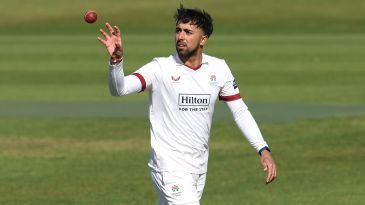
The latest point of contention involved Lancashire, who saw their seamer Ajeet Singh Dale suffer a hamstring injury during the opening day of their clash against Gloucestershire. Singh Dale became the ninth player to be replaced under the trial, but the process was far from smooth. Match referee Peter Such rejected Lancashire’s initial request to bring in Tom Bailey, arguing that the replacement did not meet the necessary ‘like-for-like’ criteria.
Lancashire head coach Steven Croft expressed his clear dissatisfaction with the process, noting that Bailey—a right-arm seamer who opens the bowling—would have been the natural replacement for Singh Dale. Instead, the club was forced to bring in Ollie Sutton, a left-arm seaming all-rounder who had to travel several hours by taxi from Leicestershire to join the squad. This resulted in a scenario where Sutton could not even take the field until the second day, leaving the team shorthanded for much of the opening day.
The Challenge of Defining ‘Like-for-Like’
The core of the issue lies in the ambiguity surrounding the term ‘like-for-like.’ Croft highlighted that the current system lacks clear, pre-defined metrics, leading to subjective decisions by match officials. “It was a little bit on stats, and seemed a little bit on experience,” Croft remarked regarding referee Peter Such’s reasoning. “Nothing like that was stipulated when these regulations came out. Obviously, there’s going to be grey areas in it. But if Tom bowled that first ball, I don’t think anyone on the whole would have batted an eyelid. We weren’t trying to pull the wool over anyone’s eyes.”
This sentiment is shared by others in the game. Earlier in the week, Glamorgan captain Kiran Carlson suggested that the rules need significant refinement, pointing to instances where teams have seemingly gained an advantage by bringing in fresh players at critical junctures, such as the case with Nottinghamshire calling on Lyndon James to replace Fergus O’Neil.
What Happens Next?
The Professional Game Committee, chaired by Mark McCafferty, is expected to address these grievances when they convene. The consensus is that the rules, while designed to handle injury crises fairly, are currently causing more confusion than intended. The upcoming mid-May break for the T20 Blast is viewed as the ideal window for the ECB to implement necessary amendments.
By that stage, each of the 18 counties will have completed six matches and enjoyed their bye week, providing a balanced sample size to assess the trial’s effectiveness. While it remains highly unlikely that the regulation will be scrapped entirely, observers expect a more precise framework to be introduced to clarify the definition of ‘like-for-like’ and prevent further inconsistent rulings.
Balancing Integrity and Practicality
ECB head of cricket operations, Alan Fordham, previously warned teams against pushing the boundaries of the regulations. However, the clubs argue that the current implementation is stifling their ability to manage squads effectively when injuries strike early in a match. As the season progresses, the pressure will be on the governing body to ensure that the spirit of the rule—supporting clubs during injury-stricken matches—is not overshadowed by procedural red tape. The upcoming review serves as a crucial opportunity for the ECB to listen to its members and refine a policy that is meant to serve the game, not hinder it.