
[CRK]
High-Stakes Diplomacy and Governance: A Look Inside the ICC Quarterly Meetings
The global cricket landscape is currently fraught with tension, and the upcoming ICC quarterly meetings in Dubai are expected to be the epicenter of these conflicts. With a schedule that sees chief executives convene on November 5, followed by a full Board meeting of all board heads on November 7, the agenda is packed with volatile issues ranging from geopolitical friction to legal battles over player rights.
The India-Pakistan Deadlock: More Than Just a Game
While not officially listed on the formal agenda, the fallout from the Asia Cup 2025 is widely expected to dominate the Board meeting on November 7, likely fueling intense informal discussions on the sidelines. The relationship between the BCCI and the PCB has mirrored the strained diplomatic ties between the Indian and Pakistani governments, reaching a breaking point during the Asia Cup.
The tournament was marked by a rigid “no-handshakes” policy instigated by the BCCI, underscoring the depth of the animosity. This friction extended to the players, with the ICC censuring four individuals—Haris Rauf, Suryakumar Yadav, Jasprit Bumrah, and Sahibzada Farhan—for gestures and comments deemed political in nature.
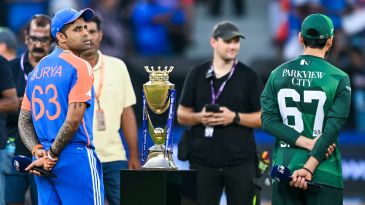
However, the most peculiar point of contention is the physical Asia Cup trophy. Despite India winning the title by defeating Pakistan in the final, the Indian team refused to accept the trophy from Mohsin Naqvi, the PCB chair and Asian Cricket Council (ACC) head. The trophy has since vanished from public view, reportedly sitting in an ACC office in the UAE. Naqvi has remained firm, insisting that as the ACC head, only he will hand over the silverware. With Naqvi’s dual role as Pakistan’s interior minister, his physical presence at the Dubai meeting remains uncertain.
The NIL Rights Tussle: ICC vs. WCA
Beyond diplomatic spats, the ICC is locked in a strategic battle over Name, Image, and Likeness (NIL) rights. The governing body is aggressively pursuing a new revenue stream through a multi-platform mobile game compatible with PCs and consoles. While the project is ambitious, it has hit a wall of resistance from the World Cricketers’ Association (WCA).
The WCA, representing 600 players globally (notably excluding Indian and Pakistani cricketers), has accused the ICC of attempting to build a commercial product using player identities without collectively agreeing on terms. The conflict intensified after suggestions at the July annual conference that boards should negotiate directly with players, a move the WCA views as a breach of existing agreements. The Chief Executives’ Committee (CEC) is expected to review progress on securing these rights this Wednesday.
A Strategic Reset and the Road to LA 2028
The ICC is also eyeing a “medium-term strategic reset” to modernize its funding and global presence. The goal is to leverage cricket’s inclusion in multi-sport events such as the Commonwealth Games, Asian Games, and the Olympics. By adopting best practices from established global sports like football, tennis, and baseball, the ICC hopes to maximize the value of its intellectual properties.
A major highlight for the CEC will be the qualification model for Los Angeles 2028. Cricket will return to the Olympics for the first time since 1900, and the ICC is finalizing how six men’s and six women’s teams will be shortlisted via a continental qualification system. Additionally, updates are expected for cricket’s inclusion in the 2026 Asian Games and the 2027 African, Pan Am, and European Games.
The CEC will also likely approve qualification pathways for several upcoming major events:
- 2027 Men’s ODI World Cup (South Africa, Zimbabwe, and Namibia)
- 2028 Men’s T20 World Cup (Australia and New Zealand)
- 2027 Women’s Champions Trophy
- 2029 Women’s ODI World Cup
Furthermore, there is a recommendation to keep the 50-overs format for the Under-19 World Cup to help Associate Members build stronger domestic structures.
The Collapse of USA Cricket (USAC)
Finally, the governance crisis at USA Cricket (USAC) remains a critical concern. On September 23, the ICC Board unanimously suspended USAC for serious breaches, including bringing the game into disrepute and failing to meet membership criteria. USAC had previously avoided suspension in July by promising board elections by October 20, but instead initiated bankruptcy proceedings and terminated its contract with commercial partner American Cricket Enterprise (ACE).
This instability has jeopardized the USA’s path to the LA Olympics, as the US Olympic and Paralympic Committee (USOPC) has refused to grant National Governing Body (NGB) status to USAC unless its governance is overhauled. Currently, the ICC has restricted funding exclusively to cricketing operations, halting all other financial support. The ICC Board will discuss USAC’s next steps this Friday, as the organization struggles to find a viable path out of bankruptcy and suspension.