

[CRK]
Match Overview
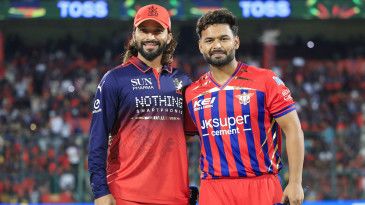
In a highly anticipated IPL encounter at the M. Chinnaswamy Stadium, Royal Challengers Bengaluru (RCB) won the toss and made the “pretty obvious” decision to bowl first against the Lucknow Super Giants (LSG). The decision reflects RCB’s confidence in exploiting the early‑morning conditions and their revamped pace attack. Captain Rajat Patidar confirmed a single change in the eleven: veteran Australian pacer Josh Hazlewood replaces Jacob Duffy, adding experience and precision to the new‑ball attack.
Key Line‑up Changes
The most significant alteration for RCB is the introduction of Hazlewood. Known for his disciplined line and length, Hazlewood brings a 150‑plus km/h pace option that could trouble the LSG top order, especially on a pitch reported to have “no grass”. This lack of grass often means reduced seam movement but can aid quicker bounce—an environment where Hazlewood thrives.
On the batting side, the RCB XI remains unchanged:
- Phil Salt (opener)
- Devdutt Padikkal
- Rajat Patidar (c)
- Jitesh Sharma (wk)
- Tim David
- Romario Shepherd
- Krunal Pandya
- Bhuvneshwar Kumar
- Suyash Sharma
- Rasikh Dar
- Josh Hazlewood
Virat Kohli, still nursing an ankle injury sustained against Mumbai Indians, is omitted from the playing eleven but is listed as an Impact Player. This strategic reserve suggests that Bengaluru’s management is prepared to deploy Kohli if the match situation demands a batting boost in the second innings.
Lucknow Super Giants Strategy
LSG captain Rishabh Pant emphasized player ownership ahead of the game, urging his side to trust their roles after a season marked by inconsistency. Pant retained the same XI that faced Gujarat Titans three days earlier, signalling confidence in the current balance. The batting order reads:
- Mitchell Marsh
- Aiden Markram
- Rishabh Pant (c & wk)
- Nicholas Pooran
- Ayush Badoni
- Abdul Samad
- Mukul Choudhary
- Mohammed Shami
- Avesh Khan
- Digvesh Rathi
- Prince Yadav
The LSG Impact Player pool includes fast‑bowler Mayank Yadav, all‑rounder George Linde, and several promising youngsters such as M Siddharth and Himmat Singh. Pant hinted that Mayank Yadav could be the preferred Impact Sub for the second innings if the match narrative requires a fresh pace option.
Pitch and Conditions
Patidar’s observation that the surface “has no grass” points to a hard, dry track that may flatten out as the game progresses. While this reduces traditional seam movement, it often enhances carry and bounce, benefitting bowlers who can extract pace from the deck—precisely where Hazlewood and Bhuvneshwar Kumar could make early inroads. Spinners may also find grip later in the innings, making the middle overs a tactical battleground.
Impact Player Rule – Tactical Implications
The IPL’s Impact Player rule adds a layer of strategic depth. RCB’s bench includes not only Kohli but also versatile options like Venkatesh Iyer, Mangesh Yadav, Kanishk Chouhan, and Jordan Cox. Each brings a unique skill set: Iyer’s power hitting, Yadav’s all‑round ability, Chouhan’s left‑arm spin, and Cox’s wicket‑keeping depth. Should RCB’s top order falter, Kohli could be introduced at the most critical juncture, providing a seasoned chase capability.
For LSG, the Impact Player list leans heavily toward pace with Mayank Yadav and George Linde, suggesting Pant’s intent to refresh the bowling attack if early wickets are elusive. The ability to replace a bowler after a spell could be decisive on a pitch that may slow down under the Bengaluru lights.
Key Battles to Watch
- Hazlewood vs LSG Top Order: The Australian’s disciplined line could test the technique of Marsh and Markram, especially in the first 10 overs.
- Kohli’s Potential Entry: If RCB finds themselves below par in a chase, Kohli’s late‑innings experience could swing momentum.
- Shami vs RCB Middle Order: Shami’s experience and ability to generate reverse swing may pose a threat to Padikkal and Patidar once the new ball wears.
- Spin Factor: As the pitch flattens, the role of spin—particularly Bhuvneshwar Kumar’s slower deliveries and LSG’s potential left‑arm option—could become pivotal.
Projected Scenario
Given the conditions, a plausible scenario sees RCB restricting LSG to a sub‑150 total, leveraging Hazlewood’s early breakthroughs and Shami’s death‑over expertise. In response, RCB’s chase could be anchored by Padikkal and Patidar, with Tim David accelerating in the middle overs. If wickets tumble, the captain may activate Kohli as an Impact Player, using his calm under pressure to guide the side home.
Conclusion
The contest in Bengaluru promises tactical intrigue, with both sides banking on strategic bench strength and a nuanced understanding of the pitch. RCB’s decision to bowl first, coupled with Hazlewood’s return and Kohli’s strategic reserve, underscores a calculated approach aimed at maximizing resources. Meanwhile, Lucknow’s emphasis on player ownership and a stable XI reflects a belief in continuity. Cricket fans can expect a tightly fought encounter that will test the depth and adaptability of both squads.