

[CRK]
Rodrigues Laments Missed Opportunity as India Fall Short in T20I Opener Against South Africa
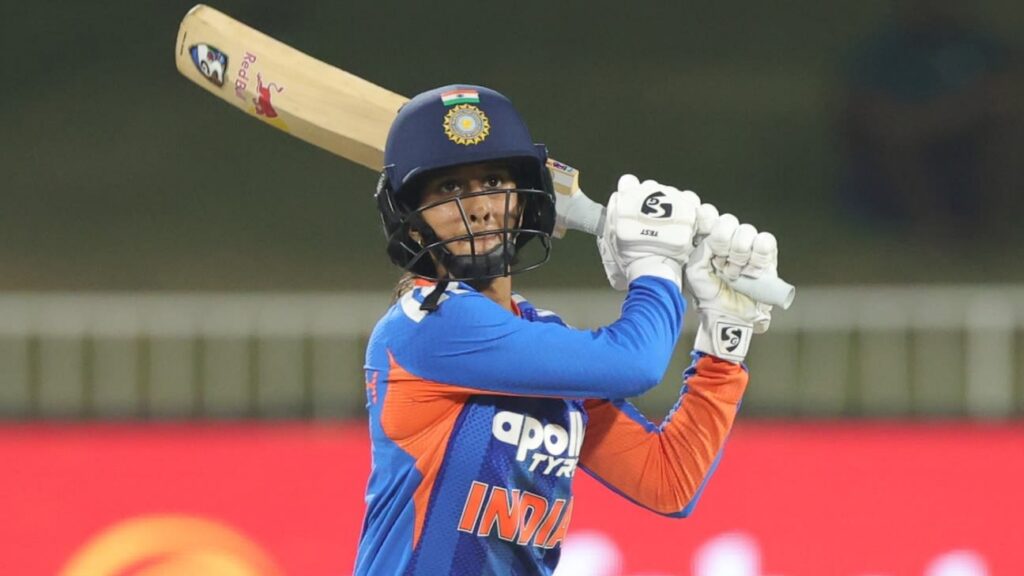
In the high-stakes world of international T20 cricket, capitalizing on momentum is paramount. India’s women’s team learned this lesson the hard way in their opening T20I against South Africa, falling short by a crucial margin despite promising starts. Post-match, a reflective Jemimah Rodrigues, whose partnership with captain Harmanpreet Kaur had steadied the innings, articulated the team’s disappointment and pinpointed the moments where the game slipped away. Her honest assessment painted a clear picture: when it was time to accelerate and maximize their advantage, India couldn’t quite seal the deal.
A Promising Start Derailed by Crucial Dismissals
The match began with a flourish for India, particularly through the aggressive batting of young sensation Shafali Verma, who blazed her way to an impactful 34 runs off just 20 balls. This explosive start provided a formidable platform, injecting early momentum into the innings. When Rodrigues and Harmanpreet Kaur then joined forces for the third wicket, their collaboration yielded a substantial 71 runs off 51 deliveries. During this period, India appeared well on course for a total exceeding 170 – a highly competitive score on most T20 surfaces. The pair showcased excellent understanding, rotating the strike effectively and finding boundaries with a blend of measured aggression and precise shot-making, rebuilding the innings beautifully after early wickets.
However, cricket, especially in its shortest format, is a game of fine margins, and timely wickets can dramatically alter the course of a match. India’s burgeoning momentum was abruptly halted with two quick dismissals – those of Verma and Smriti Mandhana – which occurred before Rodrigues and Harmanpreet could truly consolidate. Rodrigues herself then fell to a crucial delivery from Tumi Sekhukhune in the 15th over, leaving India at 119 for 3. This dismissal, as Rodrigues candidly confessed, occurred at ‘the wrong time’, preventing a set batter from exploiting the death overs and pushing the accelerator further. Instead of reaching the projected 175-mark, India could only manage 157 runs, a total South Africa chased down with five balls to spare, securing a 1-0 lead in the five-match series.
“We were around 15-20 runs short. With the kind of start we got – Shafali, the way she batted was great. Then two wickets falling in two overs… But then Harman and I getting that partnership back. I think when we had built that momentum and removed the difficult part of it, when time came to capitalise, we were not able to capitalise,” Rodrigues stated candidly after the game. “And also, the conditions were a little bit tricky in the first innings. There was slight hold on the wicket. But yeah, definitely we were 15 runs short.”
The Critical Phase of Capitalisation
Rodrigues’s words underline a fundamental, often decisive, aspect of T20 batting: the crucial transition from building a stable foundation to launching an all-out assault in the final overs. The partnership she forged with Harmanpreet had successfully navigated the tricky middle phase, absorbing pressure, rotating the strike, and meticulously setting the stage for a grand finish. But her unexpected departure meant a new batter had to start afresh, consuming precious deliveries and losing the rhythm and momentum established by the set pair. While Harmanpreet remained unbeaten on a valiant 47 off 33 balls, the subsequent lower-order batters struggled to accelerate effectively, highlighting the significant void left by Rodrigues’s pivotal dismissal and the subsequent lack of a seasoned finisher at the crease.
The ‘wrong time’ dismissal is a common lament in cricket, particularly for batters who feel they were perfectly poised to unleash a flurry of boundaries. For Rodrigues, it was undoubtedly a moment of personal disappointment, but also a valuable learning curve. “It was just that when the time came for us to capitalise, I got out, I fell on the wrong time,” she reiterated, acknowledging the impact of her wicket. “Because for set batters, it’s easier to bat through and take it deep. So, in the next match, I will come back and take that responsibility again.” This commitment to taking greater responsibility in future games speaks volumes about her resolve, maturity, and deep understanding of the game’s evolving demands.
Commendable Bowling Effort and Future Adjustments
While the batting unit faced scrutiny for not reaching a more formidable total, Rodrigues was quick to commend the valiant efforts of the Indian bowlers, who fought hard to take the game into the final over despite defending a par score. “Coming in the second innings, I think our bowlers did really well to get it to the last over. Like Shreyanka Patil bowled really well. N Shree Charani bowled really well. A little more better execution and I think we are going to come back stronger in the next game.”
This acknowledgment highlights the fine margins inherent in T20 cricket, where even a slight improvement in execution – a few more dot balls, a tighter line and length, or a successful variation – could have swung the result decisively in India’s favour. The conditions, described as having a ‘slight hold’ on the wicket, suggest that the pitch was not entirely flat, offering some assistance to bowlers. This characteristic inherently made the task of chasing 158 a bit more challenging than it might appear on a true batting paradise, underscoring the fighting spirit of the Indian bowling attack.
Eyes Firmly on the T20 World Cup
Beyond the immediate series outcome, this tour of South Africa holds significant importance for India’s comprehensive preparations for the upcoming T20 World Cup, scheduled later in the year in England and Wales. India are the reigning ODI world champions, a testament to their prowess in the longer white-ball format. However, their T20 record against top-ranked sides in the last 12 months presents a mixed picture, with four losses out of nine games against formidable opponents like Australia, England, and now South Africa. While their overall win-loss record of 10-4 in this period is bolstered by a dominant 5-0 whitewash against Sri Lanka at home, these performances against stronger opponents offer a more realistic gauge of their World Cup readiness and highlight areas for improvement.
Rodrigues views this series as a crucial opportunity for the entire squad, especially for players who haven’t had extensive match exposure in high-pressure situations. “Coming to the World Cup, we have batting till the end, a lot of allrounders,” she observed, emphasizing the team’s depth. “But also, the allrounders coming later have not got so much match time and experience. So, I think playing here in South Africa is going to be really great for us as a preparation also for the World Cup and for our entire batting order too.”
The challenges faced in this series, including navigating tricky pitch conditions and performing under the pressure of playing against a strong opponent, are invaluable for refining team strategies and building collective confidence. India’s team management will undoubtedly be scrutinizing these performances closely, looking to fine-tune their playing XI, optimize their batting order, and ensure their talented all-rounders are battle-hardened and ready for the global showpiece event. The next game provides an immediate chance for redemption, and with the lessons learned from the opener, India will be aiming to execute their plans with greater precision and secure a much-needed victory to level the series.